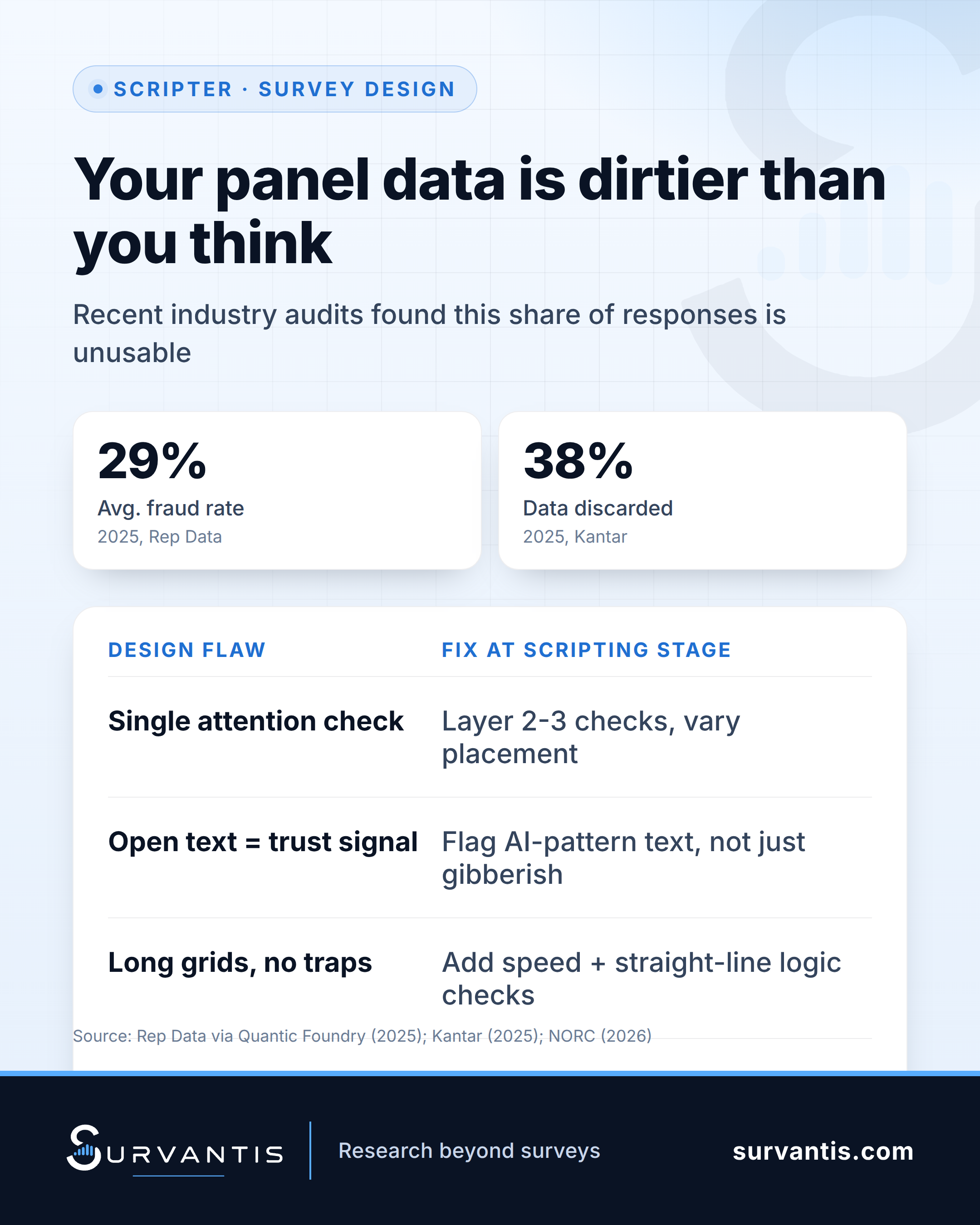
We used to think a CAPTCHA and one attention check were enough. They aren't. Click farms now share qualification criteria in private groups, and AI tools can complete a survey persona-by-persona in minutes. Basic gibberish checks don't catch that anymore.
What actually helps, and what we build into scripting from day one:
- Layer 2-3 attention/logic checks at different points, not one at the start
- Treat suspiciously polished open-ends as a flag, not a quality signal
- Add speed and straight-line checks to every grid question
- Rotate screener wording so qualifying answers can't be memorized and shared
- Run device/duplicate fingerprinting before quotas fill, not after
None of this replaces panel-side fraud tools. But a survey that's scripted defensively catches a lot before it ever reaches your data-cleaning team. That's the part we control as researchers, and most of us still under-invest in it.
In Survantis Scripter we build this logic directly into the questionnaire so quality checks run in real time, not as a post-hoc cleanup job.
What's the one fraud-catching question or check you never skip anymore? And have you tried Survantis Scripter yet?
Sources
#MarketResearch #SurveyDesign #DataQuality #QuantitativeResearch