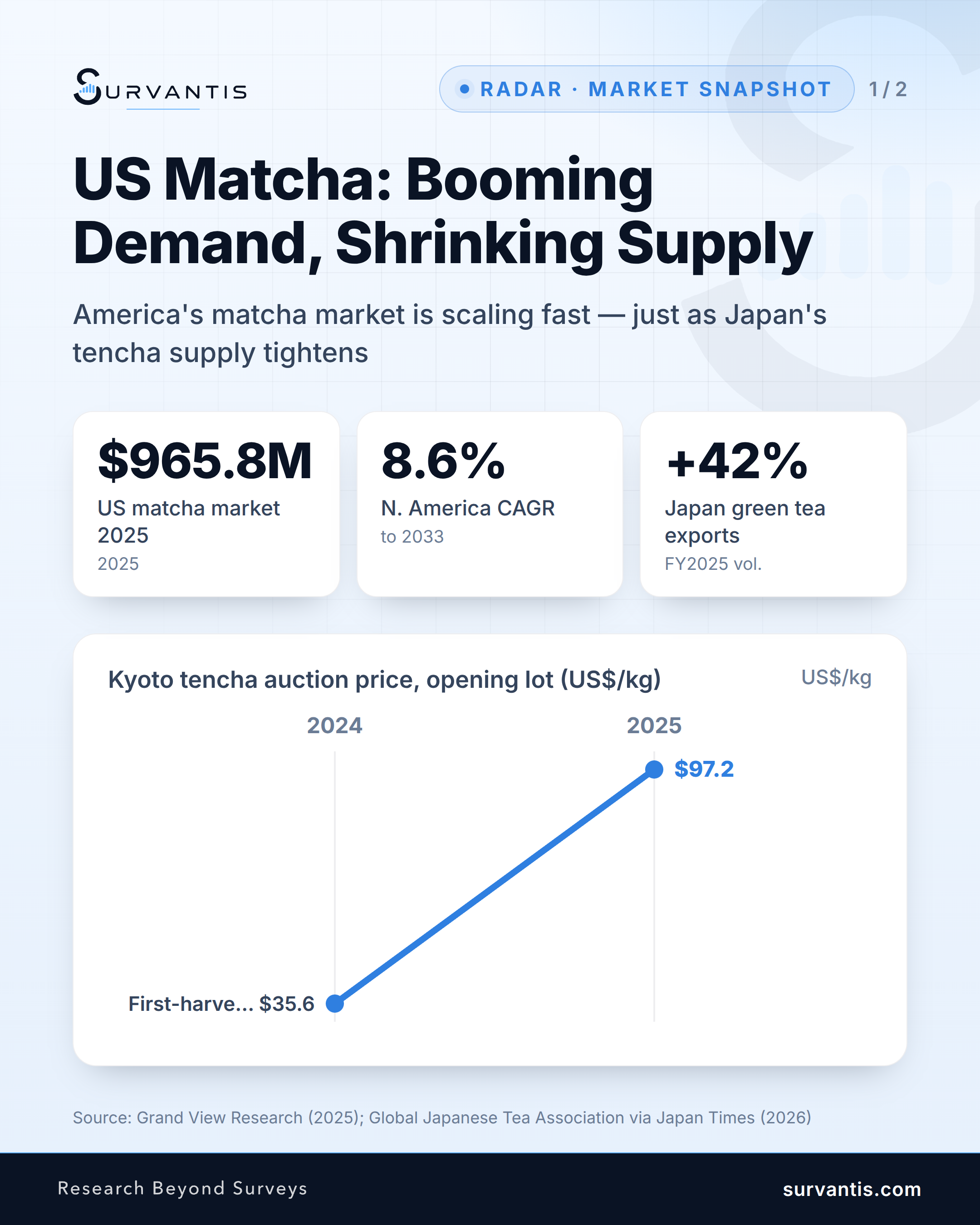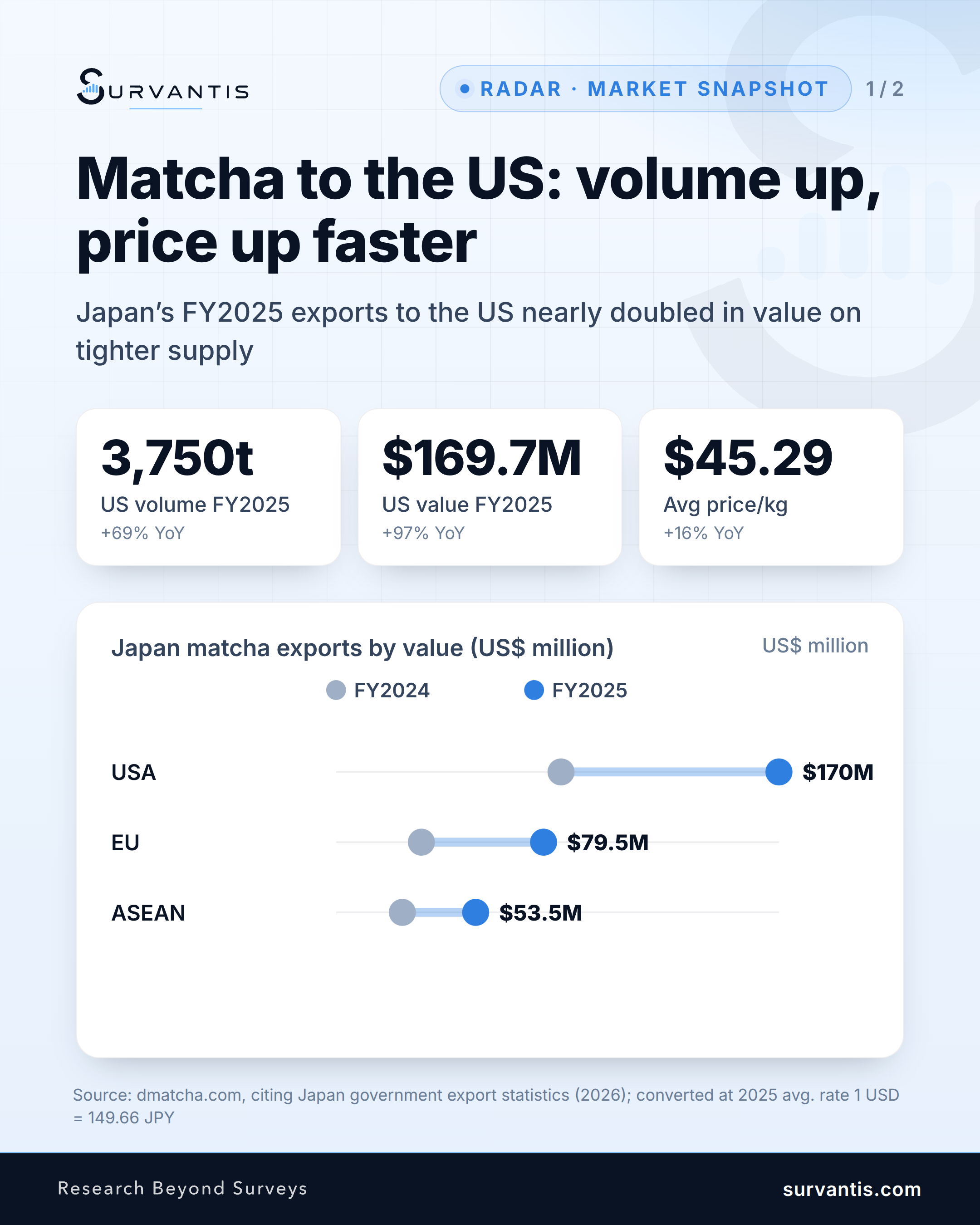
In fiscal 2025, Japan’s matcha shipments to the US jumped to 3,750 tonnes, worth $169.7 million — up 97% in value on just a 69% rise in volume. That gap matters: buyers are competing hard for a tea that mills can’t produce fast enough. Tencha harvests are shrinking in some regions while every café chain in North America wants a matcha line on the menu.
For anyone sourcing or launching matcha in the US, three things to get right before the first shipment:
- HTS 0902.10 — plain matcha powder is usually duty-free, but blend it with sugar or milk powder and the code (and the duty) changes.
- FDA facility registration and Prior Notice are mandatory — plan weeks, not days, before the container ships.
- Labeling needs net weight in both units, full ingredients and country of origin — small print, big reason for holds at the port.
We pulled this from a Radar-style look at matcha in the US: market size and demand drivers, the import and labeling rules, and how brands are advertising matcha right now.
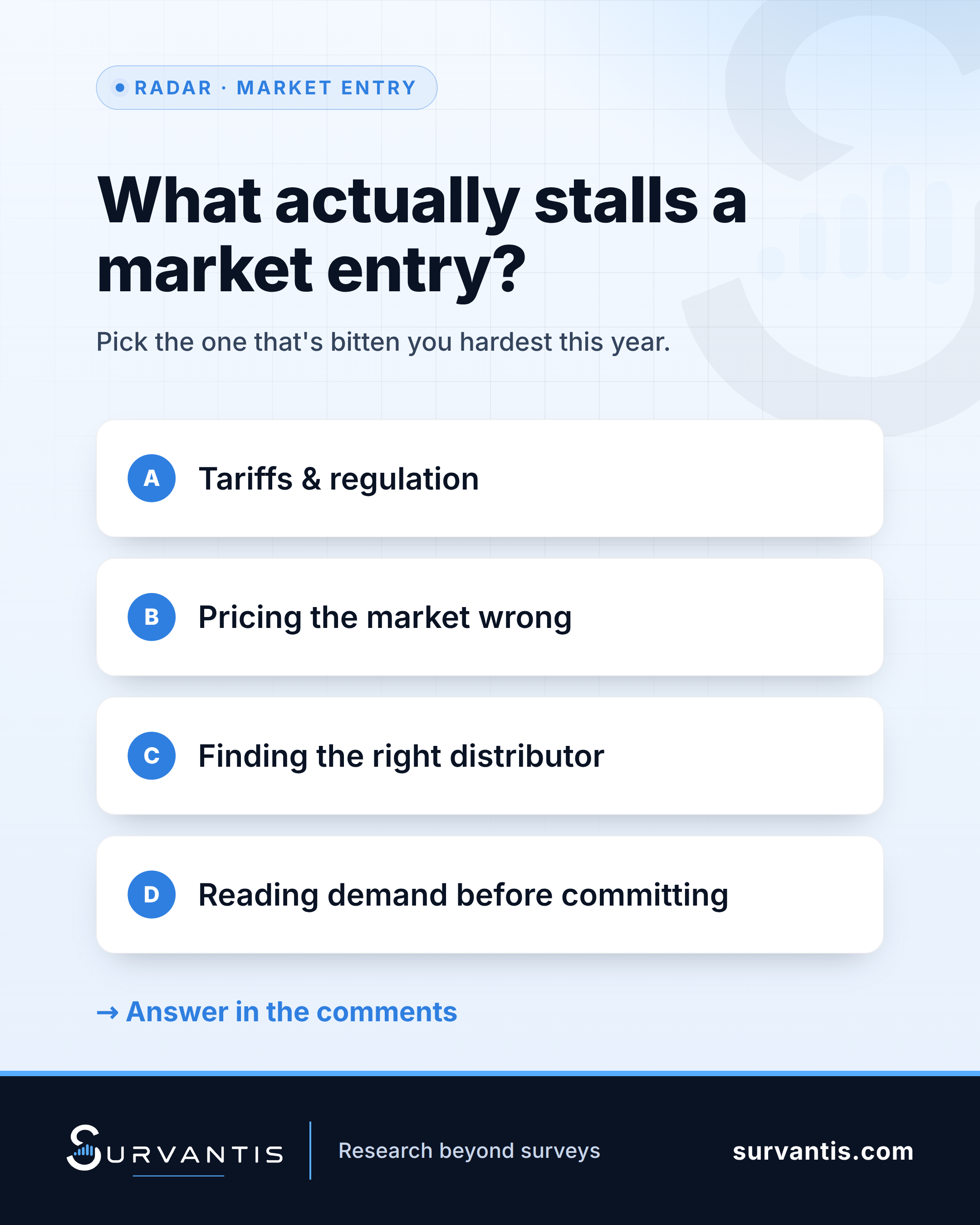
Working on a product and country of your own? Drop them in the comments and we may feature it in a future Radar Request.
Sources
#MarketResearch #MarketEntry #ExportStrategy #MarketIntelligence