Matcha just became one of the toughest categories to source — and one of the fastest to sell.

· 1 min read · Survantis Research Team

Matcha just became one of the toughest categories to source — and one of the fastest to sell.

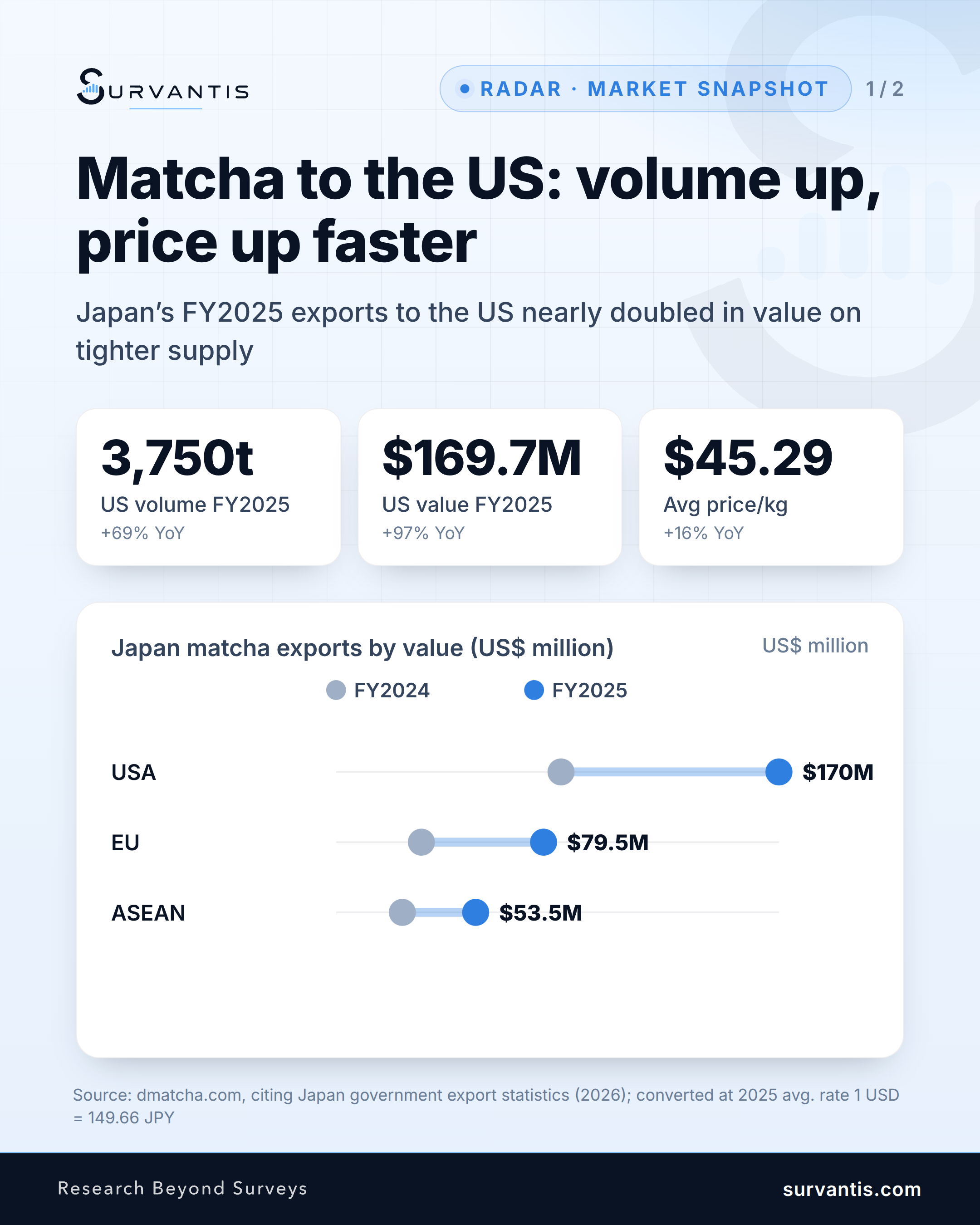
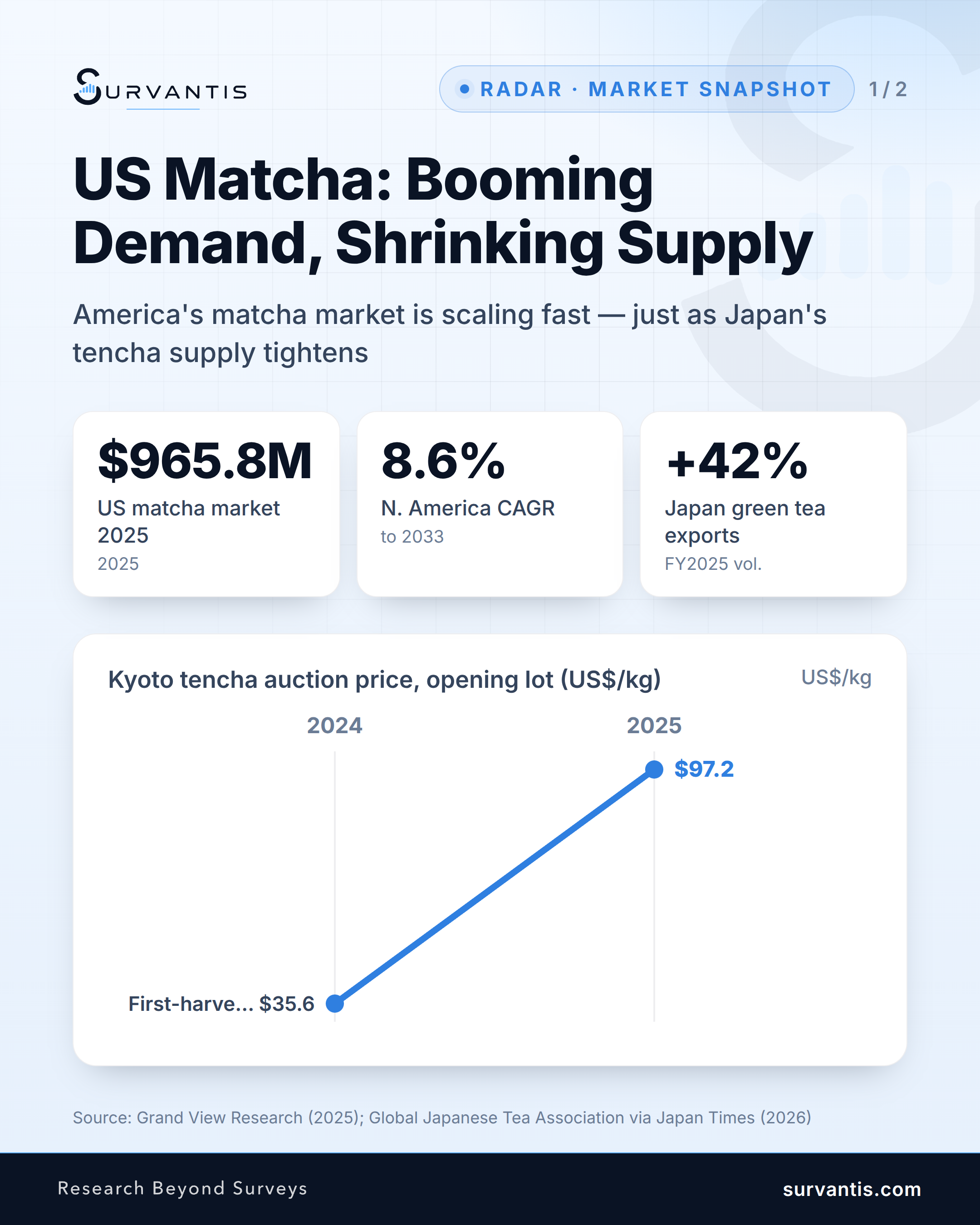
The US matcha market hit $965.8 million in 2025, with North America's matcha segment growing at roughly 8.6% CAGR through 2033. Cafés have turned matcha lattes into a permanent menu item, not a seasonal trend.

Here's the catch: the supply side isn't keeping up. Japan's green tea exports jumped 42% by volume in fiscal 2025, but the opening tencha lot at Kyoto's spring auction went from about $35.6/kg in 2024 to roughly $97.2/kg in 2025 — premium Uji lots cleared far higher than that. Farmland takes about five years to come online, so this isn't a one-season spike.

What this means if you're bringing a matcha product into the US:

  • Lock supply contracts early — much of next year's harvest is already spoken for
  • Check grade labeling carefully — culinary matcha sometimes gets sold as ceremonial
  • Build pricing that survives a higher cost floor, because it's not resetting down
  • Treat Japan sourcing risk as a line item in your market-entry plan, not an afterthought

We look at exactly this kind of demand-vs-supply gap in Radar market-entry reports — pricing, import rules and channel data in one place.

What product + country should we map next? Drop it in the comments.

Sources

#MarketResearch #MarketEntry #ExportStrategy #MarketIntelligence

Research, re-engineered, in your inbox.

Practical guides on questionnaire design, qualitative analysis and market entry. One email a month. Unsubscribe anytime.

Keep reading