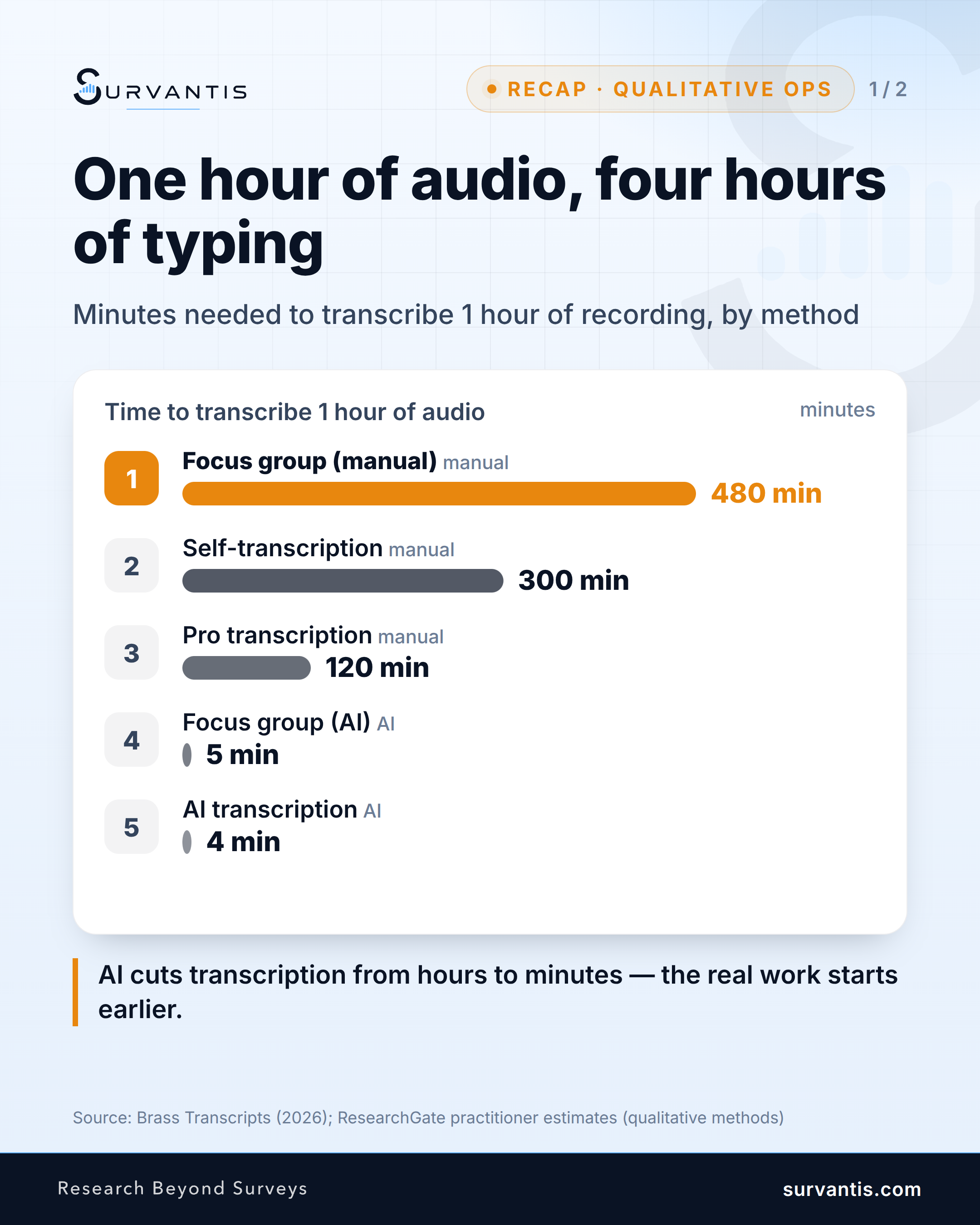
We just pulled the numbers on this and they're stark. Self-transcription runs 4-6 hours per hour of audio. A professional transcription service still takes 2-4 hours turnaround per file. AI tools now do the same hour of audio in 2-5 minutes.
That gap used to be the quiet killer of qualitative timelines. A six-group study meant a week just waiting on transcripts before anyone opened a codebook.
But here's the part people skip: speed in transcription doesn't automatically mean speed in insight. We've seen teams get a transcript back in minutes and then spend the same three days they always did, because nobody separated moderator from respondent cleanly, or because the themes were never cross-checked across groups.
- Fast transcription buys you time — it doesn't buy you analysis
- Speaker separation matters more than raw speed
- Verbatim quotes still need a human eye before they go in a report
- The real bottleneck moved from typing to thinking
This is exactly the gap Recap is built for at Survantis — speaker-separated transcripts, summaries and themes, so your team spends its time on what the respondents actually meant, not on rewinding audio.
What's eating more of your project timeline right now: the transcription itself, or turning transcripts into themes you can defend to a client?
Sources
#MarketResearch #QualitativeResearch #FocusGroups #DataAnalytics