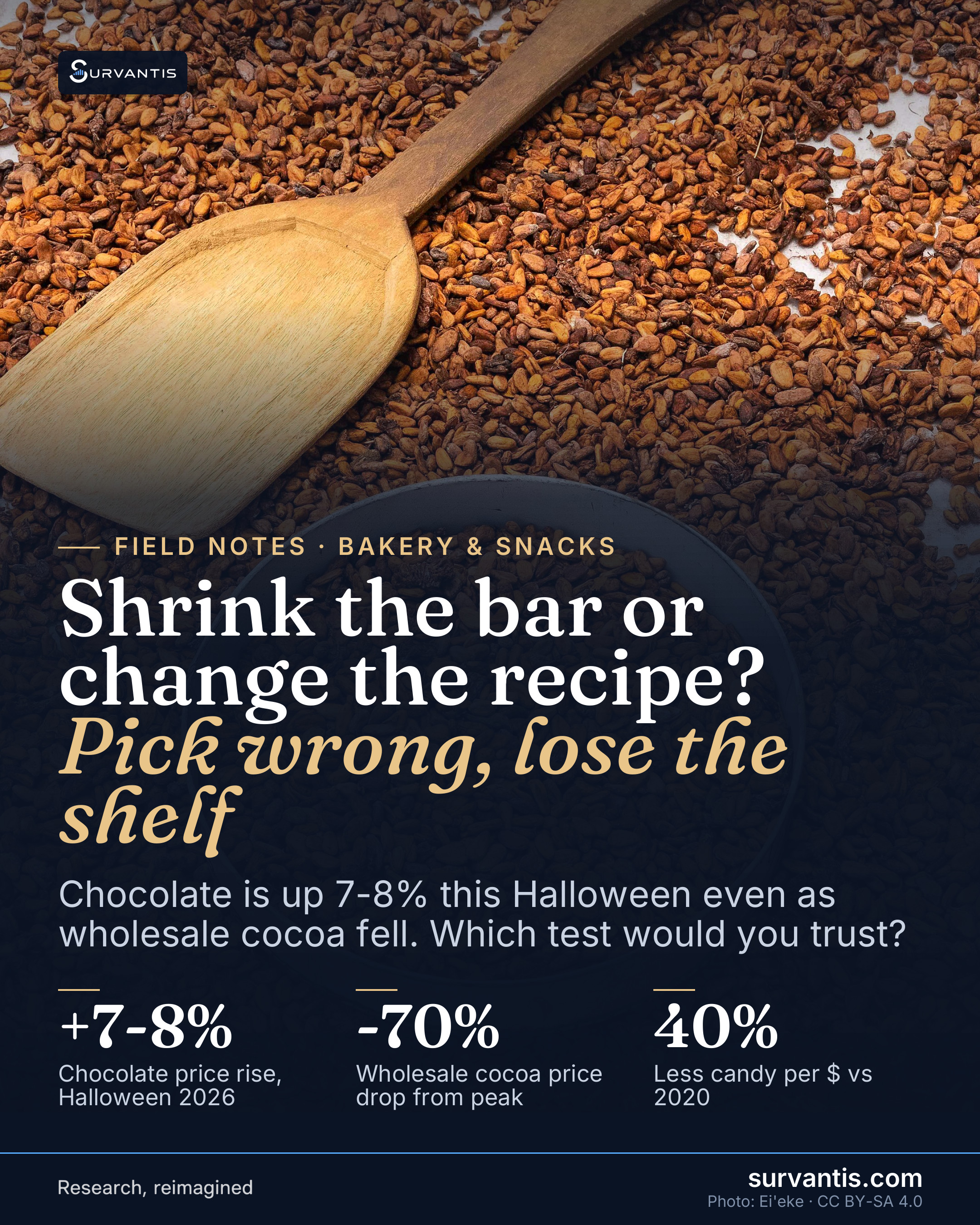
Talk to anyone in bakery or confectionery right now and you'll hear the same three options on the table: shrink the pack, swap cocoa butter for an alternative fat, or just raise the shelf price and say it out loud. Each one gets tested differently, and we'd argue most companies default to whichever method is fastest rather than whichever one actually predicts behaviour.
- JAR/CATA sensory panels tell you if the reformulated bar tastes “off”, but not whether someone switches brands over it
- Conjoint or MaxDiff forces the price-vs-size trade-off shoppers make at the shelf, which top-box liking scores never do
- Claimed-reaction questions (“would you still buy this?”) are cheap and almost always too optimistic
- Social listening catches the complaints after launch, which is useful but too late to change the recipe
Our take: claimed-reaction surveys are the most common and the least predictive. A trade-off exercise, even a simple one, tends to catch the brand-switching that a liking score hides.
Which one do you actually trust when a reformulation decision is on the line, and has one ever gotten it wrong for you? If you're testing a recipe change or a pack resize this quarter, Helix can script the MaxDiff or conjoint trade-off in a form your panel can finish on a phone.
Sources
#MarketResearch #ConsumerInsights #FMCG #ProductTesting