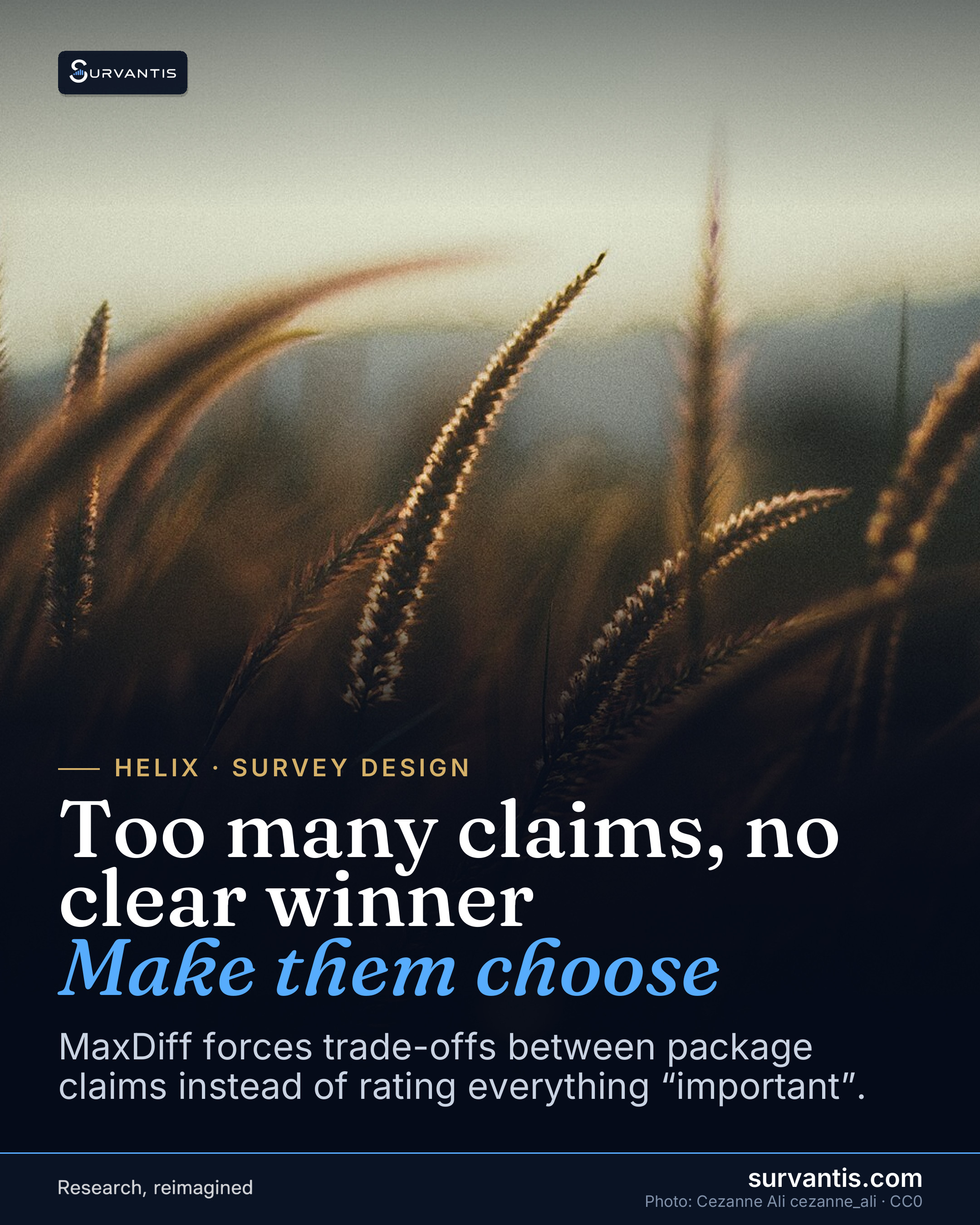
Protein. Low-sugar. Plant-based. Artisanal. No added sugar. Indulgent. Clean label. Every one of them tested “important” in a rating scale, which is exactly the problem: rating scales let people call everything important, so you end up with a cluttered pack and no real hierarchy.
MaxDiff (best-worst scaling) fixes this by refusing to let respondents off the hook. Instead of rating each claim, they see a small set, usually 4-5 claims at a time, and have to pick the one that matters most and the one that matters least. Repeat that 8-10 times with different combinations and every claim gets compared against enough others to produce a real, ranked score of relative importance, not just a stack of similar-looking averages.
A few things worth getting right when you set this up in Helix:
- Keep the list to 10-16 claims; past that, respondents need more exhibits to cover them properly
- Each claim should show up at least three times across a respondent's set of screens
- Write claims at the same length and specificity so one isn't an easy “best” just because it's catchier
- Design for mobile first: short claim text, big tap targets, no horizontal scrolling
One honest limitation: the worst-choice step takes real attention, and on a phone that second tap can feel like a chore after screen six or seven. We keep claim counts and exhibit numbers conservative for exactly this reason.
How are you deciding which claims make the final cut on pack right now, rating scales, gut feel, or something more structured?
Sources
#MarketResearch #SurveyDesign #PackagingResearch #CPG