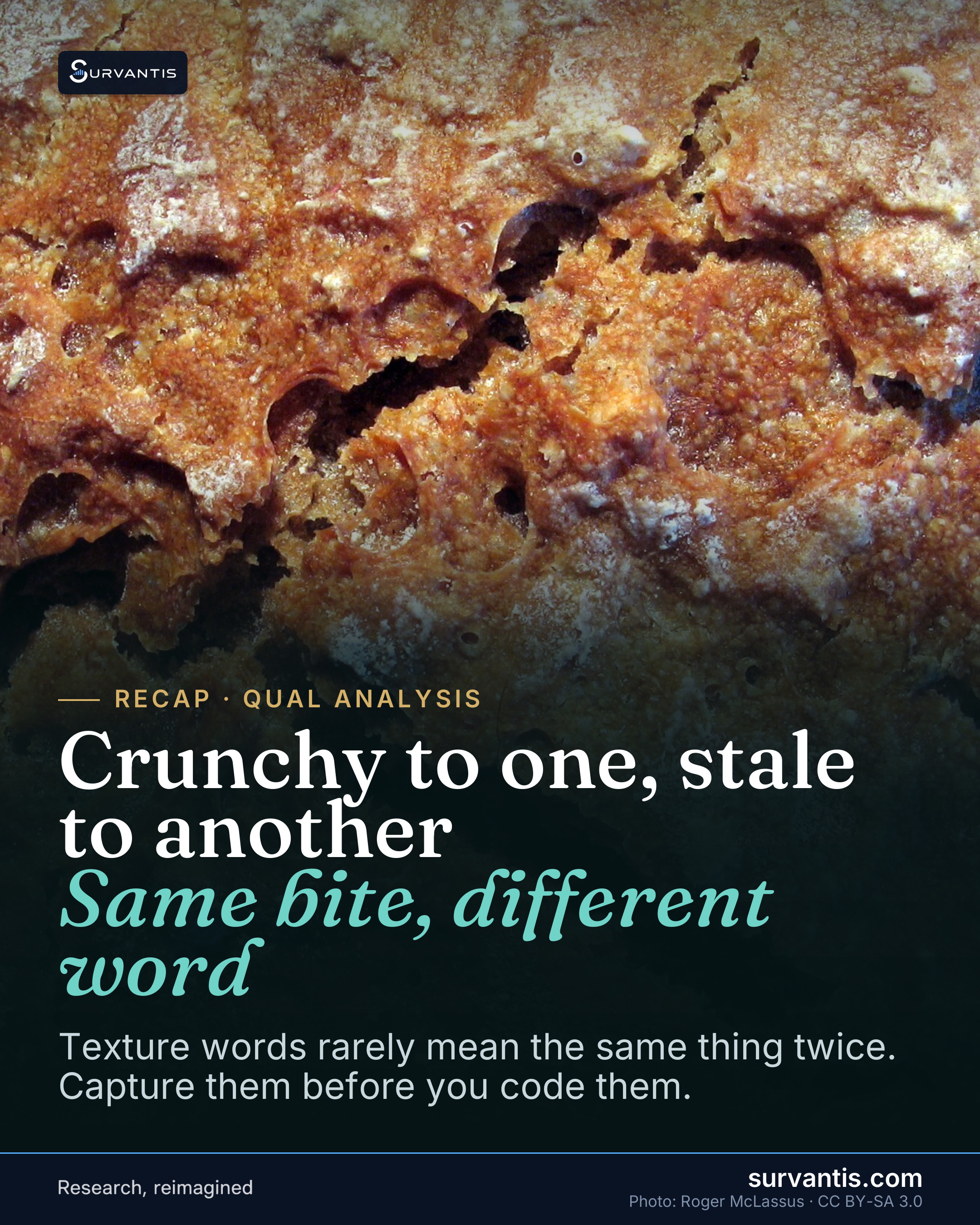
This is the quiet problem in bakery and snack taste tests. Texture is now rated as important as flavor by most consumers, and brands are leaning hard into contrast textures and mouthfeel as a selling point. But the vocabulary consumers use to describe that texture is shaky. A peer-reviewed study across English, Mandarin, Spanish and Hindi speakers found consumers' texture terms didn't map cleanly across languages, and sometimes not even within one.
For whoever transcribes and codes these sessions, a few habits save the analysis:
- Write texture words exactly as spoken. Don't quietly swap “crumbly” for “dry” at the transcript stage, that's an analyst's judgement call, not a fact.
- Build a short glossary of sensory terms per project before thematic coding starts, so two coders don't silently disagree on what “dense” means.
- Flag the moments where a moderator let “it's nice” pass without asking why. That's a probing gap, not a finding.
- If you back-translate texture terms for a global report, reread them. Meaning shifts more than people expect.
We build this kind of structured early pass into how we run Recap for sensory and focus-group work, because the coding only gets harder if the groundwork is loose.
How does your team handle texture verbatims that don't quite translate, between languages or between people?
Sources
#MarketResearch #QualitativeResearch #SensoryResearch #FoodIndustry