That is not a translation problem. It's a reporting problem, and it happens more than most teams admit.
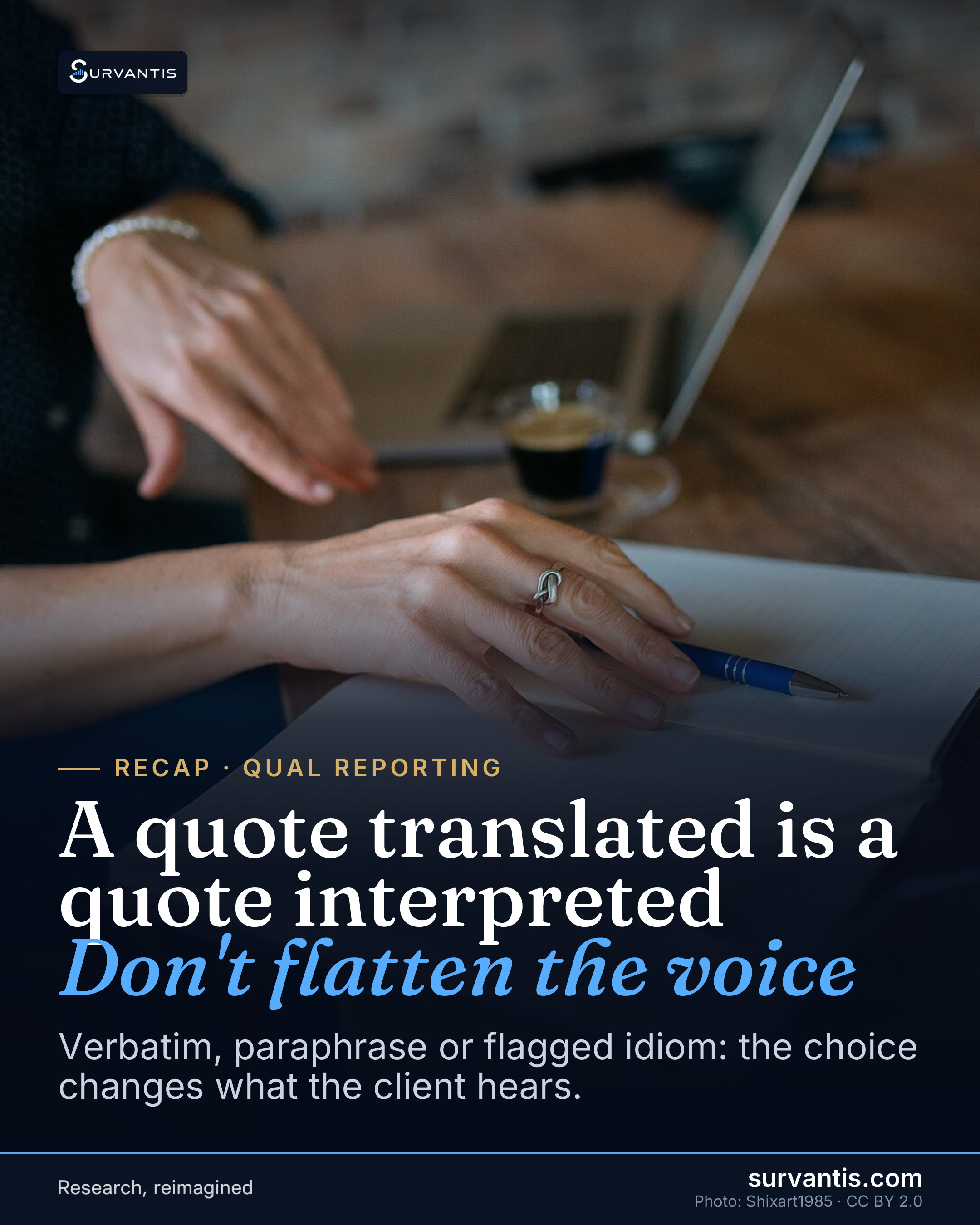
The standard qual workflow (transcribe, code, theme, write up) was built assuming one language. Cross-border work adds a layer that generic advice usually skips: deciding what happens to a quote between the transcript and the slide.
A few habits that hold up across waves:
- Code and theme in the original language before you translate anything. Translating first, then coding, is where meaning quietly drifts.
- Pick verbatim vs paraphrase per quote, not as a blanket rule. If the respondent's exact phrasing is the finding, keep it close to the source and explain the idiom in a bracket rather than smoothing it into plain English.
- Flag slang, idioms and culturally loaded expressions the moment you see them. A phrase that sounds flat in English can carry real weight in the original.
- Add a second bilingual read, even a light one, on the quotes that carry your headline claims. Full back-translation on every line isn't realistic, but your three or four load-bearing quotes deserve it.
- Keep a running glossary of terms that resist translation. It saves arguments in wave three.
Researchers writing up Turkish respondents for a US client, or the reverse, run into this constantly. We built Recap's speaker-separated transcripts and theme summaries with that handoff in mind, so the translation step is deliberate rather than an afterthought.
How does your team decide which quotes get the verbatim treatment?
Sources
#MarketResearch #QualitativeResearch #DataAnalytics #MarketIntelligence