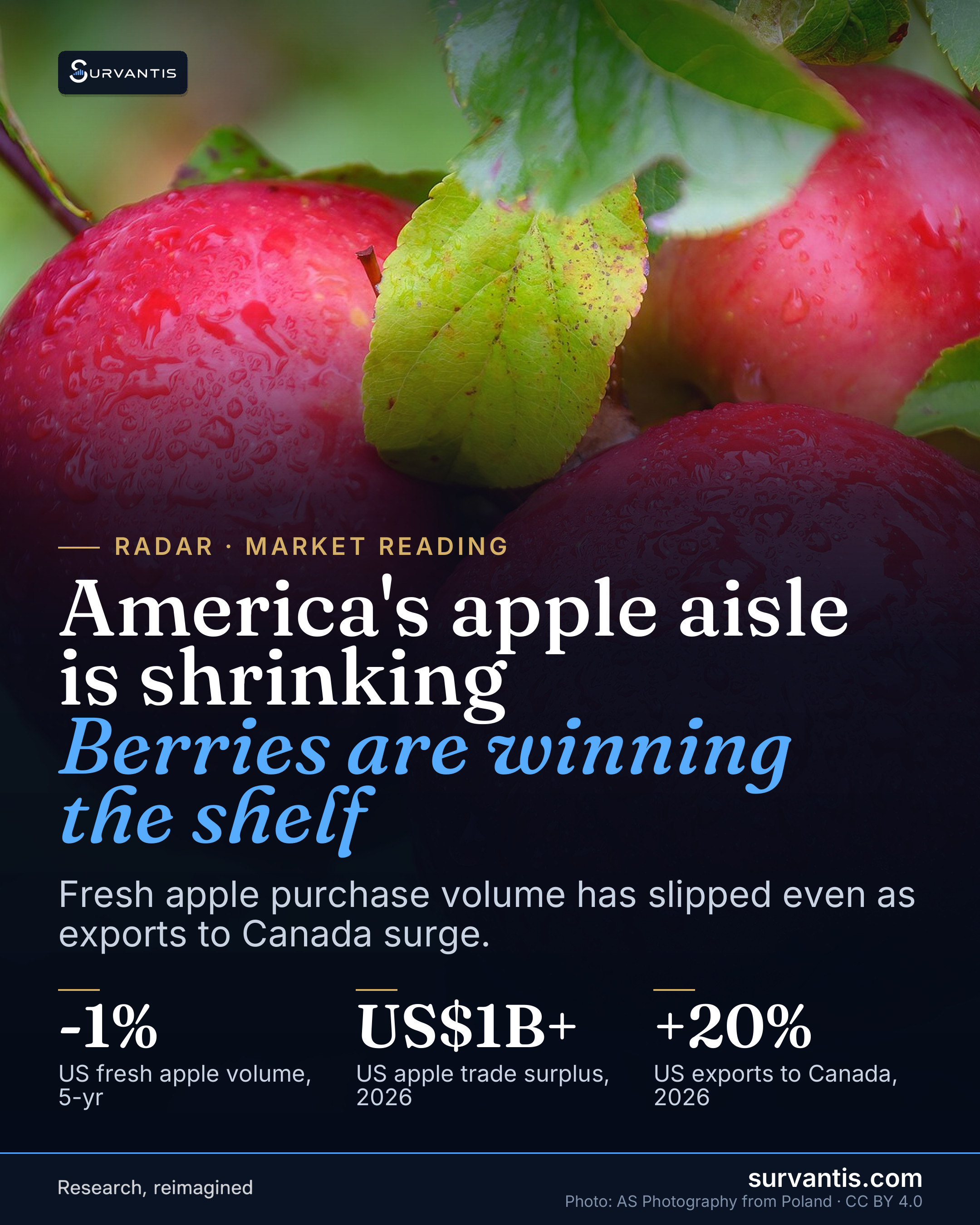
USApple's 2026 Industry Outlook is blunt about it: front-of-store space once reserved for fall apple promotions is going to berries, table grapes and imported fruit that sells year-round. Apples still fill the produce aisle, but they're losing the premium real estate that drives impulse buys and brand visibility.
Here's the twist: while the domestic cart shrinks, the border tells a different story.
- US fresh apple exports hit nearly 45 million bushels in 2025/26, up 2%
- Imports fell 12%, pushing the trade surplus to nearly 41 million bushels — worth over US$1 billion
- Canada took 19% of all US apple exports, up 20% year over year, and now sits firmly behind Mexico as the #2 market
For apple marketers, that's two different games at once. At home: fight for shelf space with a merchandising and promotion plan, not just a harvest. Across the border: Canada is a near-zero-tariff, cold-chain-ready market under USMCA that's actually growing, which makes retail partnerships and seasonal ad spend there worth a much closer look.
If you sell produce into the US or are weighing Canada as your next stop, how are you tracking shelf space and retailer buy-in before you commit marketing budget? This is exactly the kind of three-part read — market, trade rules, media — a Radar report is built for.
Sources
#MarketResearch #MarketEntry #ExportStrategy #FreshProduce