We keep seeing the same split in conversations with exporters. Some run a handful of calls with distributors and call it done. Others commission a full conjoint study that takes two months and a five-figure invoice before a single bag has shipped.
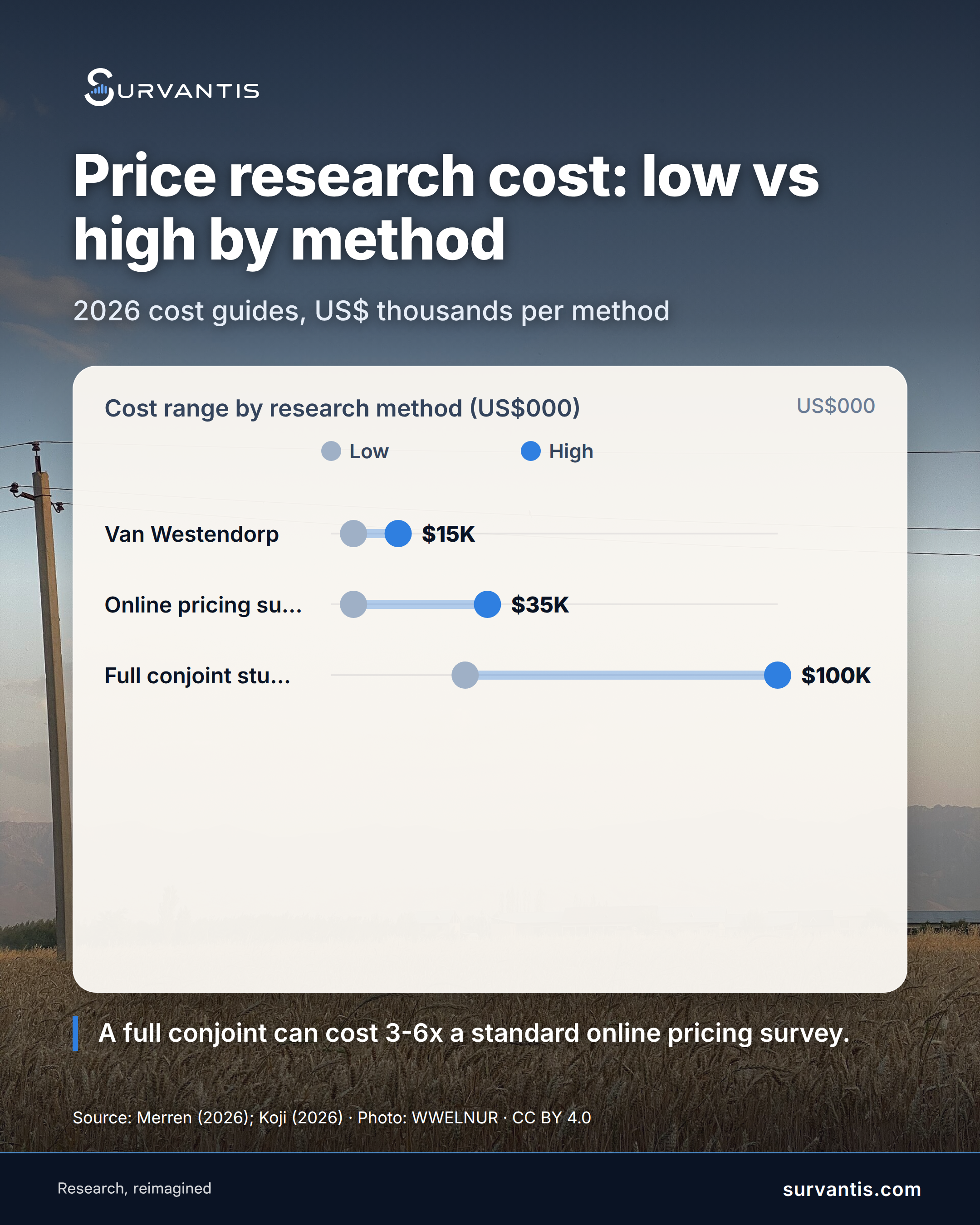
2026 cost guides put a standard online pricing survey at roughly US$5,000-35,000 depending on audience and market complexity, while a full-service conjoint study typically runs US$30,000-100,000+ over 8-12 weeks. A Van Westendorp price sensitivity read, on the other hand, can be done in 1-2 weeks once you have the right respondents.
For a mid-size exporter testing elasticity in one new country, that's a real decision: spend the five figures and the two months, or get a directional read fast and refine later with real sales data.
- What's your floor: the minimum you'd spend to feel confident on a launch price?
- Do you lean on quick AI-assisted surveys, a proper conjoint, or just distributor conversations?
- Has a "cheap" pricing study ever cost you more later through a wrong price?
We build a lot of these pricing reads into Radar's market-entry work, so we're genuinely curious how your team draws the line between fast and rigorous.
What's the smallest pricing study you've trusted enough to set a launch price on?
Sources
#MarketResearch #MarketEntry #PricingStrategy #ExportStrategy